How to Prevent Water Damage in Your Wood Flooring

Updated: Oct 28

Why water and wood floors don't mix, and practical steps to prevent water damage to your hardwood flooring.
Planning a project? Talk with Joe Avila: call 908-232-6600 or book a virtual consultation.
Why Is It That Water and Wood Don’t Mix?

In nature, they do, but, for anyone with a beautifully finished hardwood floor installation, that’s where the problem lies. Wood is fast friends with this life-sustaining element. As it would in nature, the wood grain happily absorbs the moisture to survive. However, when you are dealing with a finished wood flooring, you need to make sure you keep them far, far apart. Usually, a flat wood floor has moisture content between 6% and 11%, but once a floor begins to take on water, the real trouble begins. If the floor’s moisture content goes higher than 12%, it will start to cup on the surface of the floor. With extreme water damage, you could even see your floor buckle or break the adhesive bond. And at this point, you are going to need an expert repair specialist.
Are There Any Floors That Are More Water Resistant Than Others?
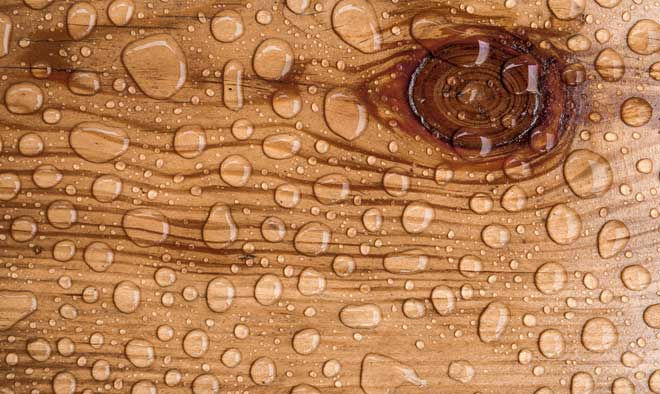
With hard-wax oil finished floors, your floors may be more resistant to water than a urethane-finished floor. Both finishes act as a durable barrier between the water and the wood, preventing the water from quickly soaking in, but hard-wax oil allows for expansion and contraction more readily. You see, hot air rises which allows for the water to evaporate out from underneath a hard-wax oiled floor. A polyurethane-finished floor has a plastic film over the top, which can trap moisture underneath, potentially resulting in more damage to your floor if you are not careful.
What Are the Signs of Water Damage?

Whether the wood floor is engineered or solid, the surface should be flat. To better clarify, if you run your hand across the surface, it should be level without any edges being higher than others. When water reacts with the wood there will be a visual difference where the edges lift from the center leaving a cup-like appearance, also known as cupping. The color of your floor may change if it has come into contact with water for a prolonged period. The color of the wood will usually become darker, and in rare cases, may become black as an indication of extreme water damage.
Is there any way that I can save my floor if there is a large flood or leak?
It all depends on how quickly you recognize the problem. For example, I was installing a urethane-finished floor for a commercial project at a corporate space and a toilet clog flooded the bathroom in the middle of our install. Fortunately, after completing the necessary steps in a timely fashion, the floor was saved from any water damage.
However, some people are not so lucky! As a rule of thumb, if your flood or leak has been stagnant on top of or underneath your floor for more than 24 hours, chances are you will have to replace the portion of your floor that was damaged.
Are there any steps that I can take to be proactive and prevent future water damage to my floors?
There are a few basic steps that you can take to be proactive. You should always make sure that your sink, refrigerator, dishwasher, and laundry machine’s fittings are checked every few months to ensure that their fittings and seals are watertight.
It is important to also be aware of over-mopping your floors. As trivial as it may sound, over-mopping hardwood floors can lead to potential water damage. We recommend to only use a sponge mop, which allows the ringing of excess water before applying it to the floor’s surface. Do not use a string mop when cleaning your floors, since it will leave too much water on the surface of the floor and could lead to potential damage.
Why don’t hardwood floors and water mix? Excessive moisture will make your hardwood flooring expand, and then contract once it dries up. This process of expanding and contracting causes the boards to cup, crown, crack, and buckle, all of which affect your floors’ longevity.
Weighing species, pattern or finish? Talk it through with Joe Avila.
4 Tips to Protect Wood Floors From Moisture

Remove your shoes. This is one of the best ways to protect your wood floors from the elements. We’d also recommend putting durable floor mats at the front door as well as the back porch.
Clean up right away. If rainwater does make it onto your hardwood flooring, wipe it up right away.
Regulate. Adjust your home’s temperature and humidity based on industry standards to control the amount of moisture your hardwood floors are exposed to as much as possible.
Invest in a moisture barrier. An important part of installation, this obstruction will shield your hardwood flooring from moisture below your home.
Handling Moisture in the Air

The absence or abundance of humidity can cause eventual damage to your hardwood floors. We suggest investing in a humidifier or de-humidifier to ensure the moisture level stays at a level that will prevent your flooring from warping or cracking.
Clean with Care

As you clean, be aware of your hardwood floors and water they’re exposed to. Instead of a deep cleaning with a lot of moisture involved, sweep often, and use a damp mop a few times every week to eliminate the gunk. Be prepared with towels to absorb any surface moisture as well as a wet/dry multi-function vacuum to ensure any dirt or water can be picked up in a timely manner.
Have a floor plan or a floor that needs attention? Joe Avila can review it with you.
Visible Signs

Some moisture-related problems are visible to the discerning eye. Primarily, wood flooring problems can occur when the wood expands and contracts. This “wood movement” occurs naturally according to seasonal shifts or when ambient relative humidity levels change in the home. These changes can also present a less-than-desirable change in the appearance of your wood flooring. For more information on water damage in wood floors check out this article!
The Antidote

The best cure is to accurately measure and assess the moisture in the subfloors before wood flooring installation and measure the MOISTURE CONTENT of the wood flooring before, during, and after the flooring installation.
Quick Answers
At what moisture content does a wood floor start to cup? A flat wood floor usually sits between 6 and 11 percent. Above 12 percent, the surface starts to cup.
What are the signs of water damage in a wood floor? Cupping, where the board edges rise above the center, and darkening of the wood, which can turn black in severe cases.
Can a floor be saved after a leak? It depends on speed. If water has sat on or under the floor for more than 24 hours, the damaged area will likely need replacing.
What mop should I use on a wood floor? A well-wrung sponge or damp mop. Avoid string mops, which leave too much water on the floor.
Talk to a Palm Beach Wood Flooring Specialist
Call Joe Avila at 908-232-6600 (9 a.m. to 5 p.m. Eastern), email joe@hugginsflooring.com or book a virtual consultation. You can also explore inspections and consultations, wood flooring samples and our collections.
About The Author
Joe Avila leads Palm Beach Wood Floors, a Huggins Wood Floor Specialist brand, and brings 26 years of hands-on wood flooring experience. He is an NWFA-certified wood flooring inspector, installer and sander, and for more than a decade he has taught accredited continuing education programs for AIA, ASID and IDCEC audiences, training thousands of architects and design professionals in the proper specification of wood flooring.


Comments